Microcement in Small Spaces: How a Seamless Finish Can Make a Room Feel Bigger

If you've ever stood in a cramped bathroom or a narrow kitchen wondering why it feels smaller than it actually is, the answer often comes down to grout lines and material breaks. Microcement solves this by creating a continuous, joint-free surface that visually expands a room without changing a single wall. For homeowners working with tight square footage, this seamless finish is one of the simplest ways to make a small space feel noticeably bigger.
Why Do Small Rooms Feel Cramped in the First Place?
Small rooms often feel cramped because the eye keeps stopping at visual interruptions like grout lines, tile edges, and transitions between materials. Every stop signals "this is where the space ends," even when it isn't true.
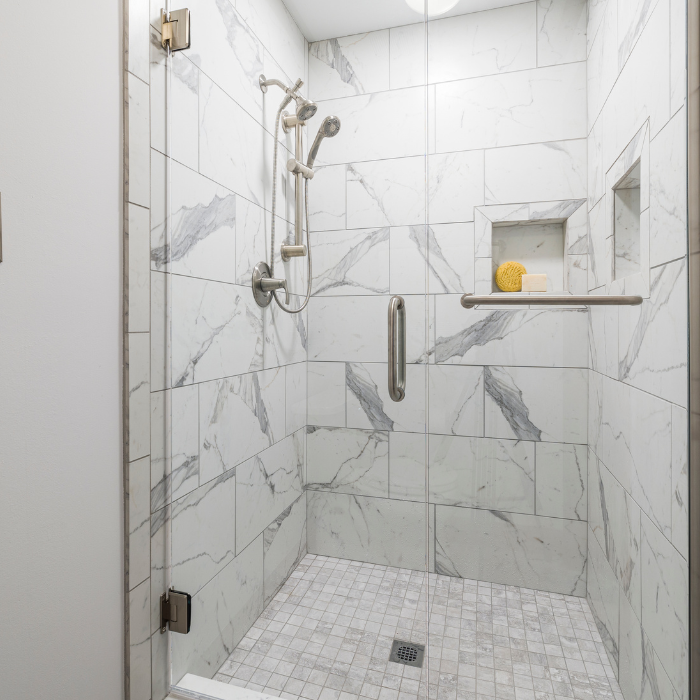
Think about a standard tiled bathroom floor. Even with large format tiles, you still get a grid of grout lines breaking up the surface. Each line acts like a tiny fence, chopping the floor into segments. The brain reads those segments as separate areas rather than one continuous space, and that perception shrinks the room even if the actual dimensions haven't changed.
Add in a different material on the walls, a contrasting baseboard, and a threshold strip where the flooring meets another room, and you've got a space working against itself visually.
How Does a Seamless Finish Change the Perception of Space?
A seamless finish removes the visual stopping points that make rooms feel divided. Without grout lines or material transitions, the eye travels further across the surface, which makes the room read as larger than its actual footprint.
This is the core principle behind why designers lean on continuous surfaces in small apartments, powder rooms, and galley kitchens. When floor, walls, and even furniture surfaces share the same material and tone, there's no visual cue telling the brain where one zone ends and another begins. The result is a sense of flow that makes a 60 square foot bathroom feel closer to 80.
A seamless surface doesn't just look modern. It tricks the eye into reading distance differently, which is exactly why microcement performs so well in compact rooms.
Microcement vs. Tile: Which Makes a Small Room Feel Larger?
Microcement generally makes small rooms feel larger than tile because it eliminates grout lines and can run continuously from floor to wall. Tile, even in large formats, still creates a grid pattern that visually segments the space.
That's not to say tile doesn't have its place. If you're working with a kitchen or bathroom microcement upgrade and want to compare both approaches side by side, it helps to look at how each material behaves in confined areas:
Tile in small spaces:
- Grout lines create visible segmentation, even with large tiles
- Corners and edges require trim pieces, adding more visual breaks
- Wall to floor transitions typically use a different material or a threshold strip
Microcement in small spaces:
- Applied as a continuous coating, so there are no grout lines to interrupt the eye
- Can be extended from the floor up the walls in a single unbroken plane
- Corners and edges are rounded or smoothed rather than trimmed, keeping the flow intact
If your priority is maximizing the sense of openness in a small bathroom or kitchen, microcement has a clear edge. If you want a more traditional look with defined pattern and texture, tile still works well. Many homeowners actually combine both, using microcement in the tightest zones and tile elsewhere.
Where Microcement Has the Biggest Impact in Small Homes
Not every room benefits equally from a seamless finish. Here's where it tends to make the most noticeable difference:
Powder rooms and small bathrooms. These are often the tightest rooms in a home, and they're also where grout lines are most visually dense because of the smaller tile sizes typically used. Switching to microcement on the floor and shower walls removes that clutter almost entirely.
Galley kitchens. Long, narrow kitchens benefit from a floor that runs uninterrupted from one end to the other. Microcement countertops paired with a matching floor can also blur the line between counter and floor, adding to the sense of continuity.
Studio apartments and open concept units. When one material flows across multiple functional zones, such as a kitchenette and a living area, the whole unit reads as more open, even without any structural changes.
Entryways and hallways. These transitional spaces are often overlooked, but a seamless floor here sets the tone for the rest of the home and avoids the choppy look of multiple flooring transitions in a short stretch.
Does Microcement Work for Both Floors and Walls?
Yes, microcement is designed to be applied to both floors and walls, which is part of what makes it so effective in small spaces. Running the same material across both surfaces removes the visual line where floor meets wall.
This flexibility is one of the biggest practical advantages over tile. Because microcement is applied in thin layers rather than installed as individual pieces, it can wrap corners, curve around fixtures, and continue up a wall without needing a trim edge or transition strip. That continuity is exactly what creates the expansive feel homeowners are after.
Practical Considerations Before Choosing Microcement
Microcement is a strong option for small spaces, but it's worth going in with realistic expectations.
Surface prep matters. Microcement needs a stable, properly prepped substrate. Cracks or movement in the base layer can eventually telegraph through the finish.
Lighter tones amplify the effect. While microcement comes in a wide range of colors, lighter and neutral tones tend to enhance the sense of space more than dark, saturated shades.
Professional application is worth it. Because the finish is applied by hand in thin layers, texture and evenness depend heavily on the skill of the installer. This isn't a strong DIY candidate if you want a truly seamless result.
Sealing is part of the process. Especially in wet areas like bathrooms, proper sealing is what makes the surface durable and water resistant over time.
If you're weighing this against a full tile renovation, working with an experienced microcement finish contractor can help you figure out which rooms in your home would benefit most, and where a hybrid approach might make more sense.
Key Takeaways
Small rooms often feel cramped because of visual interruptions like grout lines and material transitions, not just square footage.
A seamless finish removes those interruptions, helping the eye read the space as larger and more continuous.
Microcement can run from floor to wall without breaks, giving it an edge over tile in tight bathrooms, kitchens, and hallways.
Lighter, neutral tones tend to enhance the space expanding effect more than dark colors.
Proper substrate prep and professional application are essential for a durable, truly seamless result.
Final Thoughts
Making a small room feel bigger doesn't always require knocking down walls or reworking a floor plan. Sometimes it just means rethinking the surfaces you already have. Microcement offers a practical, design forward way to open up tight bathrooms, kitchens, and hallways by eliminating the visual clutter that makes small spaces feel even smaller. If you're considering this approach for your own home, it's worth reaching out to a team that works with the material daily. You can request a
microcement estimate to get a clearer picture of cost, timeline, and which rooms would benefit most from a seamless upgrade.
Recent Posts